The ACoS Trap: Why Basic Tracking Limits Growth, Profitability Metrics
The moment a brand starts scaling on Amazon, they inevitably confront ACoS (Advertising Cost of Sale). It’s the default industry metric, yet it only tells a fraction of the story—specifically, how much you spent to generate ad sales.
At PPC with PRO, we know that successful, sustainable scaling demands a view far beyond this limited silo. Profitability is not just about ad spend; it’s about unit economics, inventory, and overall brand health.
If you are an ambitious brand looking to transition from simply “breaking even” to achieving aggressive, profitable growth, here are the five crucial metrics that must be integrated into your PPC strategy.
1. True ACoS (Total Advertising Cost of Sale)
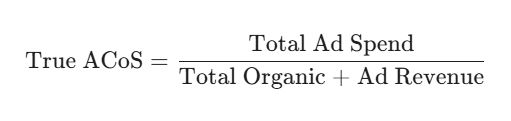
If you only track ACoS, you’re only tracking the efficiency of campaigns that directly led to a click. True ACoS (TACOS), however, shows the impact of your ads on your entire business.
Why True ACoS is the Ultimate Health Indicator
Why it matters: A high ACoS (e.g., 35%) might be acceptable if it drives a low True ACoS (e.g., 10%) by significantly improving your organic rank and overall sales velocity. True ACoS confirms that your ad investment is elevating your entire brand, not just cannibalizing existing organic sales.
2. Break-Even ACoS (BE-ACoS)
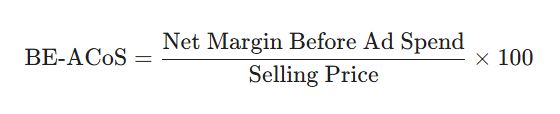
This is the most fundamental metric for determining bid limits. Your Break-Even ACoS is the point where the sales revenue exactly covers the ad cost, product cost, and Amazon fees.
Using BE-ACoS to Define Campaign Goals
Why it matters: Knowing your BE-ACoS allows you to assign specific campaign goals:
- Targeting Profit: Bid below BE-ACoS.
- Targeting Growth/Rank: Bid up to or slightly above BE-ACoS.
If you are bidding on any keyword above your BE-ACoS in an always-on campaign, you are losing money on that sale.
3. Cost Per Click (CPC) vs. Cost Per Acquisition (CPA)
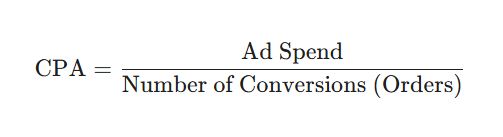
Many sellers obsess over a low CPC, assuming lower click costs equal better results. However, a high-cost keyword that converts exceptionally well is far more valuable than a low-cost keyword that generates irrelevant clicks.
Shifting Focus from Clicks to Customers
Why it matters: This calculation helps you identify which search terms are truly profitable, shifting your focus from saving money on clicks to securing high-value customers. If a keyword has a low CPC but a high CPA, it signals a major disconnect with the listing (e.g., poor images, vague A+ content).
4. Sell-Through Rate (STR)
This is the pace at which you sell your inventory relative to the inventory you receive. While not strictly a PPC metric, it is profoundly affected by it.
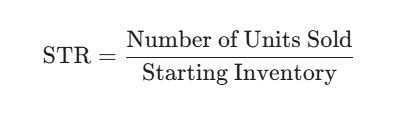
STR and its Impact on Organic Rank
Why it matters: Amazon prioritizes products that move quickly. A high STR (driven by effective PPC) helps you avoid long-term storage fees and signals to Amazon that your product deserves a higher organic rank, which in turn reduces your future reliance on PPC.
5. ROAS (Return on Ad Spend)
While ACoS looks at cost relative to revenue, ROAS inverts the formula to look at revenue generated per dollar spent, providing a clean, universal measure of effectiveness.
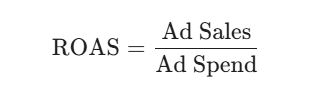
ROAS for Multi-Channel Campaign Comparison
Why it matters: ROAS provides clarity when managing multiple ad types (Sponsored Products, Sponsored Brands, DSP). It makes it easier to compare the efficiency of, say, a Sponsored Display campaign (which aims for a 4x ROAS) against a high-intent Sponsored Products campaign (which might target 8x ROAS).
The SPN Difference: Guaranteed Precision
As an Amazon Service Provider Network (SPN) Partner, PPC with PRO implements proprietary bid adjustments and reporting structures that automatically blend these five metrics to provide a single, actionable view of your brand’s growth.
Ready to move beyond basic ACoS tracking and into guaranteed, profitable growth?
→ Request your Free ACoS Audit today and let us show you the true financial health of your Amazon brand.